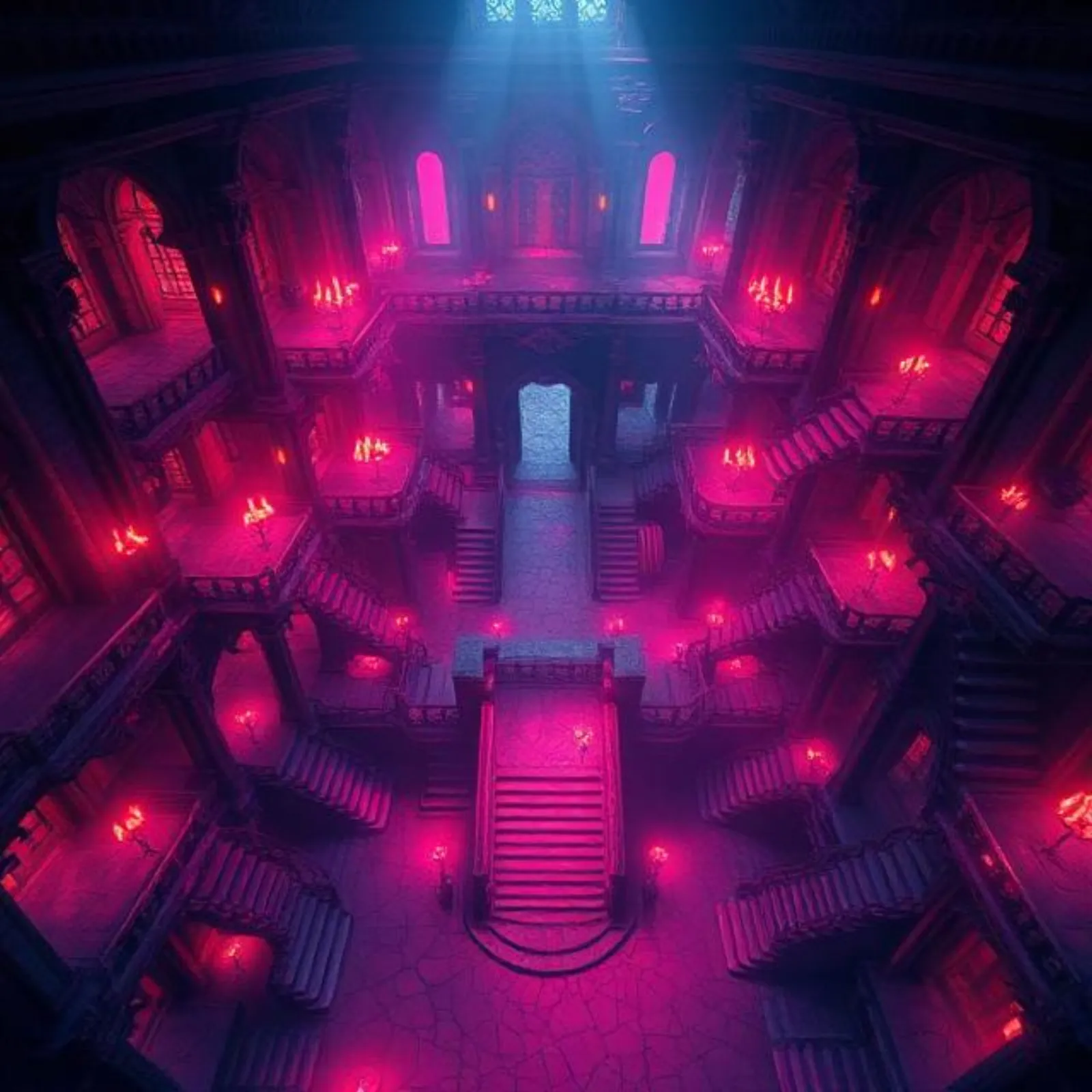
Maze Escape: Pathbound
A maze game with a 298-level campaign, a daily maze, and 23 procedural generators on four grid shapes. The full game plays in the browser.
The problem
A puzzle game built entirely from handcrafted levels eventually runs out of content. I wanted Maze Escape to keep producing new, solvable challenges without feeling random or careless.
What I did
I designed and built the whole game. Every maze grows from a seed: each campaign level names its generation algorithm, grid size, and star thresholds as data, and a breadth-first search places the exit at the farthest reachable cell, so every maze has a long, guaranteed solution. A daily maze seeded by the date, a shop, skins, powerups, and achievements sit on top of the generator and work with any layout.
How it works
The game began as a C# and .NET MAUI app with 15 generators on square grids. I rebuilt it for the web in SvelteKit and TypeScript and added 8 generators for hexagonal, circular, and triangular grids, for 23 in total. Mazes render as SVG. Guest progress saves in the browser, and a Supabase account syncs saves across devices and feeds the leaderboard.
What happened
The web build is live at mazeescapepathbound.com and plays from this site. It holds 298 campaign levels across two worlds, a daily maze with streaks, 33 skins, 8 powerups, and 15 achievements. It is my clearest example of separating core generation logic from player-facing progression. The stable part is the contract for generating and validating mazes. The changing part is everything layered on top.